
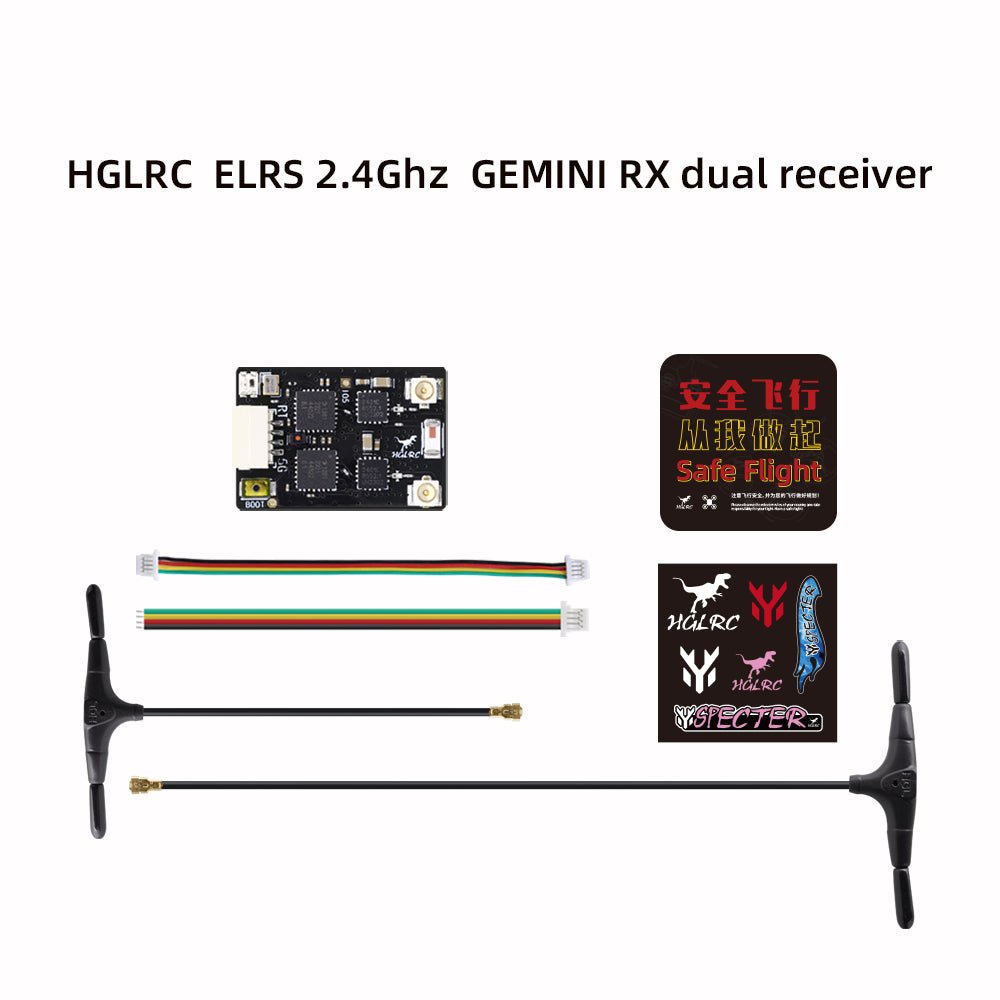
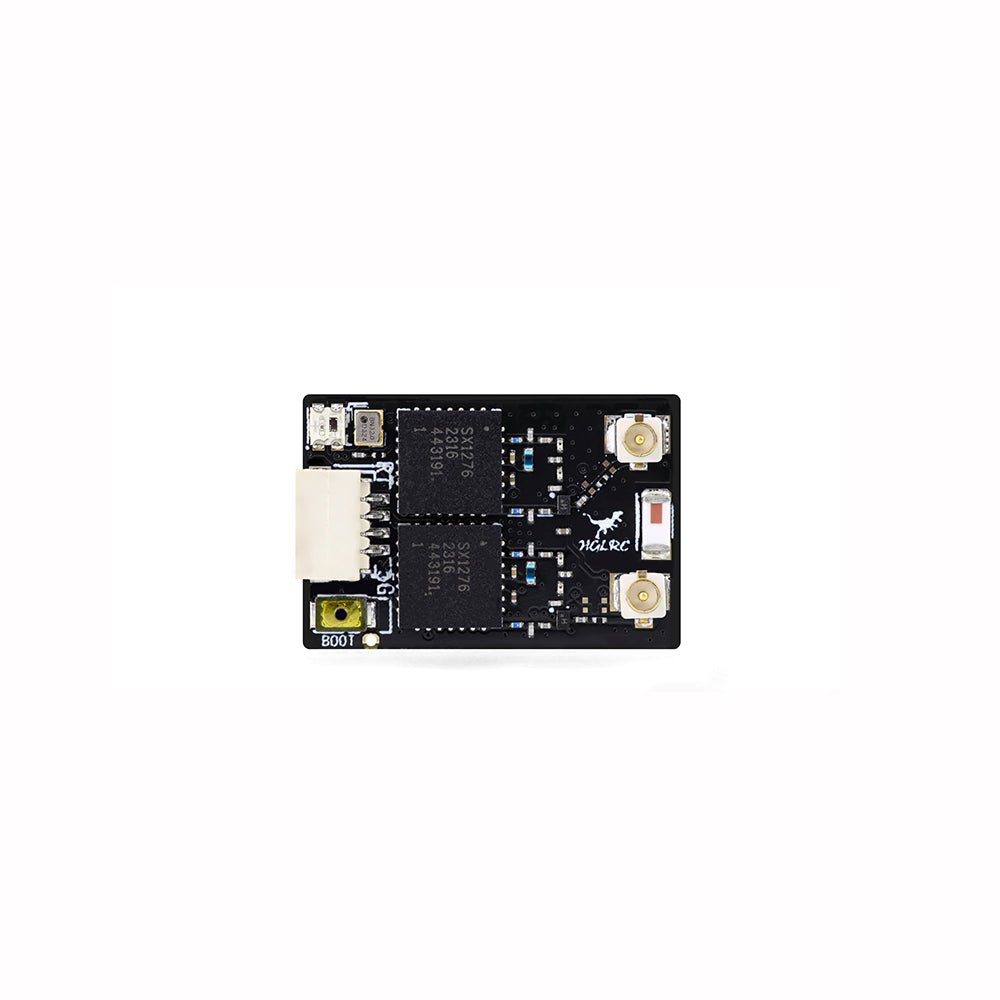
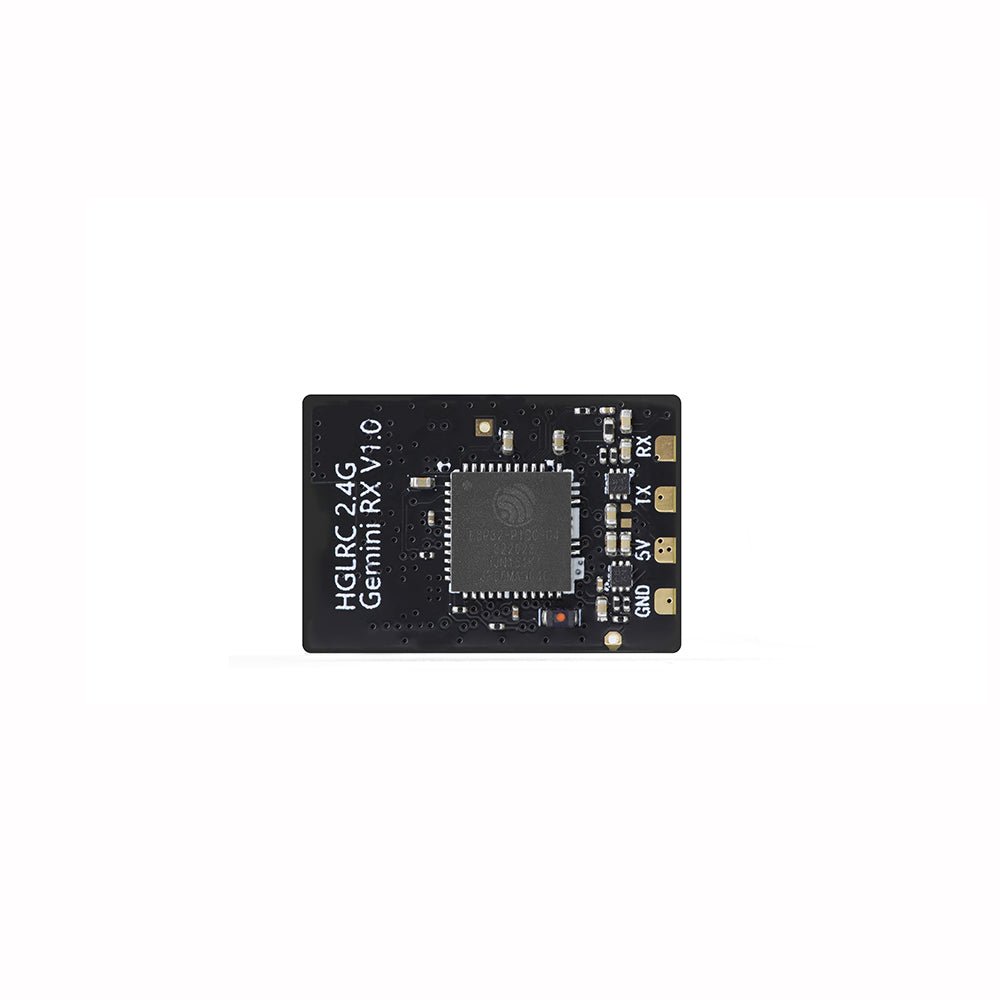
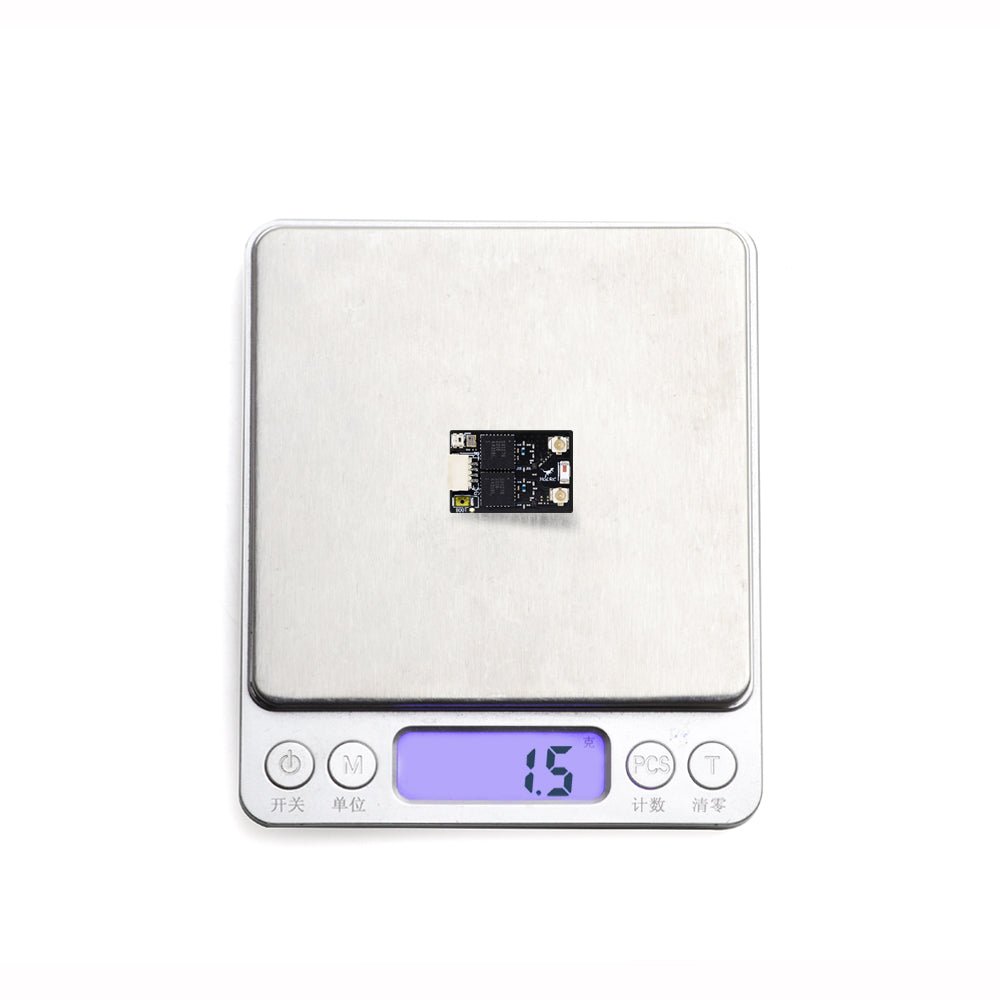
HGLRC ELRS Gemini RX 2.4G Dual Receiver – Ultra Reliable Dual-Antenna ExpressLRS Receiver for FPV Drones
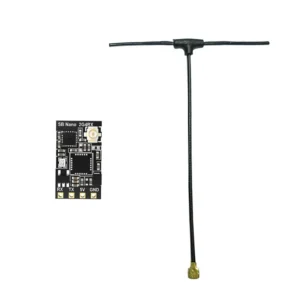
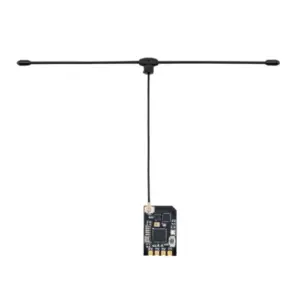
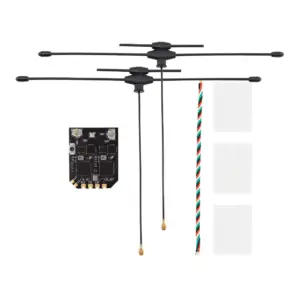
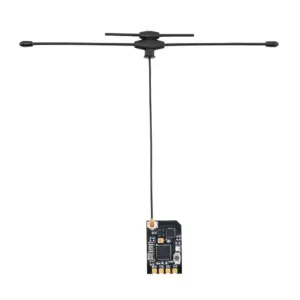
The HGLRC ELRS Gemini RX 2.4G Dual Receiver is engineered for FPV pilots who demand maximum signal reliability, low latency, and advanced RF redundancy for long-range and high-interference flight environments. Built around the latest ExpressLRS technology, this dual receiver system delivers superior packet stability by operating two independent 2.4GHz receiving chains simultaneously.

For pilots flying cinematic FPV drones, long-range quads, tactical reconnaissance platforms, freestyle builds, or mission-critical UAV systems, the Gemini RX 2.4G provides a major upgrade over traditional single-antenna ELRS receivers.
HGLRC ELRS Gemini RX 2.4G Specifications
| Feature | Details |
|---|---|
| Product Name | HGLRC ELRS Gemini RX |
| Frequency | 2.4GHz |
| Protocol | ExpressLRS |
| Receiver Type | Dual Receiver |
| RF Redundancy | Dual Independent RF Chains |
| Telemetry | Supported |
| Firmware | ExpressLRS Configurator Compatible |
| Antenna Type | Dual Antenna |
| Input Voltage | 5V |
| Application | FPV Drones, Long Range UAVs |
| Latency | Ultra Low |
| Signal Stability | Extremely High |
| Compatibility | ELRS Transmitters |
What Makes the HGLRC Gemini RX Different?
Traditional ELRS receivers use a single RF receiving path. The HGLRC Gemini RX changes this architecture entirely by introducing two fully independent receiving chains operating simultaneously.
This allows the receiver to continuously evaluate incoming packets from both antennas and utilize the stronger signal path in real time.
The result is:
- Improved signal penetration
- Better multipath rejection
- Higher packet consistency
- Reduced failsafe probability
- Enhanced low-altitude reliability
- More stable RSSI/LQ performance
For pilots operating around buildings, forests, mountains, reinforced structures, or RF-heavy urban environments, this architecture offers a substantial reliability advantage.
Dual Receiver Architecture Explained
The Gemini system continuously compares data integrity from both receiver paths, ensuring the best possible signal quality reaches the flight controller.
Key Advantages of the HGLRC ELRS Gemini RX 2.4G
Exceptional Signal Reliability
The dual receiver design dramatically improves link stability in difficult RF environments. Pilots experience more consistent LQ values and fewer sudden drops during aggressive maneuvers or obstacle-heavy flights.
Ideal for Long-Range FPV
Long-range FPV flights require stable telemetry and uninterrupted control signals. The Gemini RX architecture helps maintain stronger communication even when signal reflections and terrain interference become problematic.
Recommended applications include:
- 5-inch long-range FPV drones
- 7-inch exploration quads
- Mountain flying
- Tactical reconnaissance drones
- Industrial inspection UAVs
- Cinematic FPV systems
Better Low-Altitude Penetration
Flying behind terrain, concrete structures, trees, or metallic obstacles often causes signal reflections and packet corruption.
The Gemini RX improves resistance against:
- Multipath interference
- RF shadowing
- Signal fading
- Reflection-induced packet loss
This makes it highly effective for low-altitude cruising and proximity-based cinematic flying.
HGLRC Gemini RX vs Standard ELRS Receivers
| Feature | Standard ELRS RX | HGLRC Gemini RX |
|---|---|---|
| RF Chains | Single | Dual |
| Antennas | One | Two |
| Signal Redundancy | No | Yes |
| Packet Stability | Good | Excellent |
| Multipath Handling | Limited | Advanced |
| Long-Range Reliability | Moderate | High |
| Urban Flying Stability | Moderate | Excellent |
| Tactical Applications | Limited | Highly Suitable |
Best Drone Builds for HGLRC Gemini RX
5-Inch Freestyle FPV Drone
Perfect for aggressive freestyle pilots flying around:
- Concrete structures
- Parking garages
- Urban environments
- Metallic obstacles
The improved RF stability helps maintain control confidence during rapid direction changes.
7-Inch Long-Range Drone
Long-range pilots benefit significantly from the Gemini architecture due to improved packet consistency at extended distances.
Recommended pairings include:
- GPS rescue systems
- High-gain patch antennas
- Long-endurance Li-ion packs
- Mission Planner capable systems
Tactical and Industrial UAV Platforms
The HGLRC Gemini RX is highly suitable for:
- Surveillance drones
- Inspection UAVs
- Mapping systems
- Search and rescue applications
- Defense-oriented FPV systems
Its dual-receiver structure improves operational confidence in high-interference areas.
Installation Guidelines for HGLRC Gemini RX
Antenna Placement Best Practices
Proper antenna orientation is critical for maximum performance.
Recommended Setup
- Maintain 90-degree antenna separation
- Keep antennas away from carbon fiber
- Avoid VTX antenna proximity
- Mount antennas clear of ESC noise sources
- Use TPU antenna supports when possible
UART Wiring Configuration
Typical wiring includes:
| Receiver Pad | Flight Controller |
|---|---|
| 5V | 5V |
| GND | GND |
| TX | RX UART |
| RX | TX UART |
After wiring:
- Enable Serial RX in Betaflight
- Select CRSF protocol
- Bind via ExpressLRS WiFi or bind phrase
- Verify telemetry response
Firmware Compatibility
The HGLRC Gemini RX supports modern ExpressLRS firmware through the ExpressLRS Configurator.
Recommended configuration settings:
| Setting | Recommended Value |
|---|---|
| Packet Rate | 250Hz or 500Hz |
| Telemetry Ratio | Standard |
| Dynamic Power | Enabled |
| Model Match | Enabled |
| WiFi Update | Supported |
Real-World FPV Performance
Pilots upgrading from standard ELRS receivers often notice:
- Smoother LQ readings
- Reduced random signal drops
- Better confidence behind obstacles
- Cleaner telemetry consistency
- Improved low-altitude control precision
These advantages become especially visible during:
- Mountain surfing
- Dense urban flying
- Forest cruising
- Long-range exploration
- High-interference environments
Why 2.4GHz ELRS Remains the Preferred FPV Standard
The 2.4GHz ExpressLRS ecosystem offers an excellent balance of:
- Low latency
- High refresh rate
- Compact antennas
- Excellent penetration
- Strong community support
- Wide transmitter compatibility
When paired with Gemini dual-receiver technology, overall RF reliability improves significantly beyond traditional single-chain systems.
Recommended Companion Hardware
For optimal performance, pair the HGLRC Gemini RX with:
- High-quality ELRS transmitters
- Properly tuned antennas
- Low-noise flight controllers
- Stable power filtering
- Quality VTX systems
Well-designed RF layouts dramatically improve overall link quality.
Who Should Buy the HGLRC Gemini RX 2.4G?
The HGLRC ELRS Gemini RX 2.4G Dual Receiver is ideal for pilots who prioritize maximum reliability over minimal cost.
It is especially recommended for:
- Long-range FPV pilots
- Professional drone operators
- Tactical drone builders
- Cinematic FPV creators
- Industrial UAV integrators
- Mountain and terrain flyers
For high-value aircraft and mission-critical systems, the additional RF redundancy provides substantial operational confidence.
CHECK OUT OUR VTX COLLECTION:
What is a Video Transmitter?
https://www.easytechjunkie.com/what-is-a-video-transmitter.htm
VTX stands for video transmitter, this is the heart of the FPV life system. Pumping life into the many possibilities of FPV. VTXs come in many different shapes, sizes, strengths, and wiring setups. Strapped to the front of the quad is an FPV camera, and strapped to the head is a pair of FPV goggles. You can watch live, instantaneous footage right from the cockpit because the VTX is sending the footage received from the camera out to the goggles.
You are picking the right VTX for you. This will start with knowing if size and weight are factors for you. If you are planning to race, and only race, then you will select any VTX that is light in weight. It’s probably important that your VTX can do pit mode and channel control (depending on which one you choose). This may be a smart audio feature or the tramp protocol. Pit mode is where you will be able to set your VTX to a certain mode that allows you to power up your quad without powering up your VTX to keep you from blasting video and trampling over other racers on the track. Channel control allows you to change your frequency right from your radio for easy switching at a race, or to prepare your quads for the race the next day. Seeing that range is not so much of a factor in a race, only 25mw is allowed, and all that you need. So you can pretty much pick any when it comes to figuring out which is best for you and your power output needs.
Reviews
There are no reviews yet.